
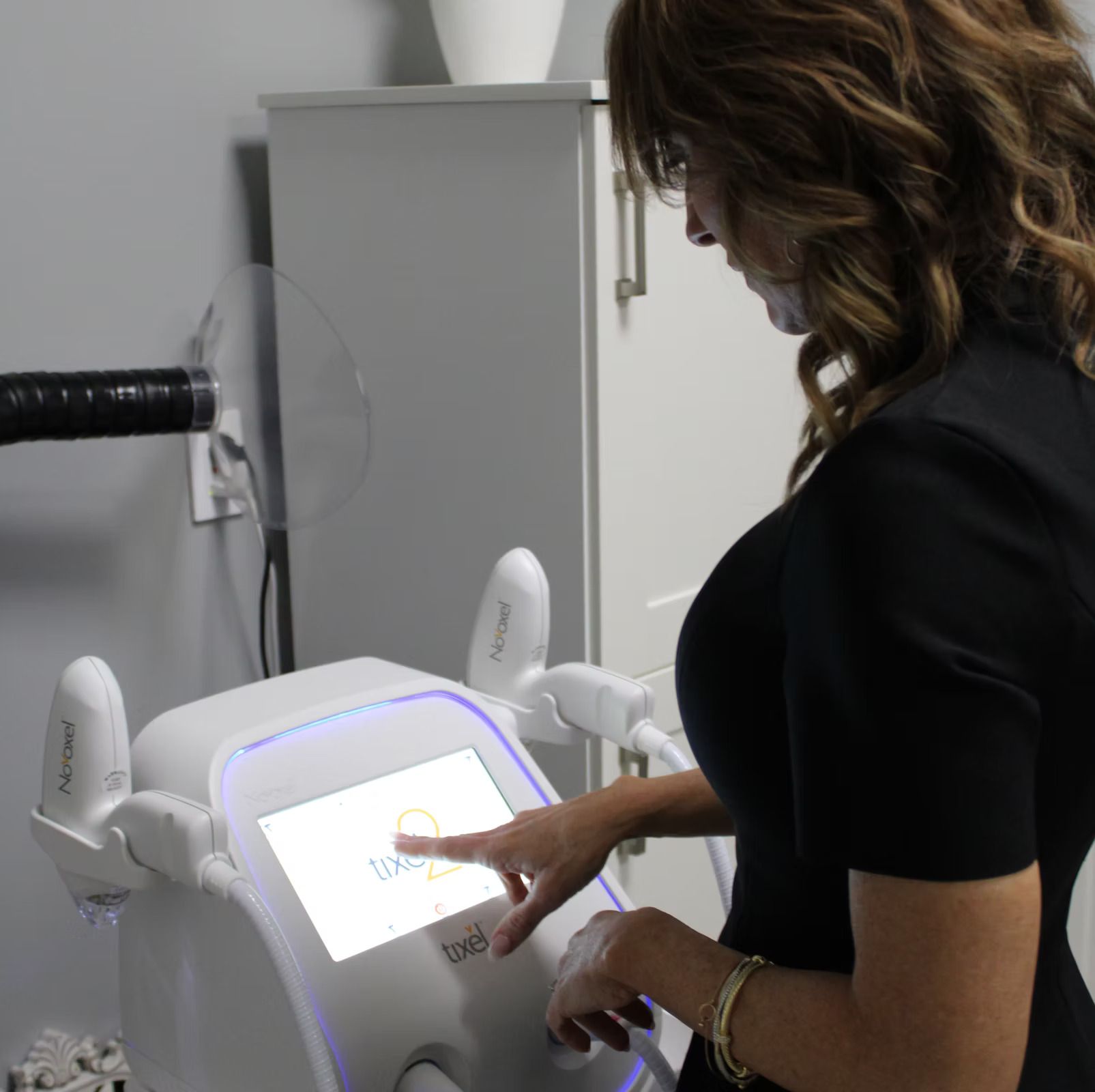
Texture Correction Without Extended Recovery
Tixel2 based in Owensboro serving clients in surrounding towns for aging skin, acne scars, and uneven texture
Uneven skin texture from aging, acne scarring, or sun damage doesn't always respond to surface-level treatments, but aggressive laser procedures often require significant downtime that many clients can't accommodate. Tixel2 uses controlled thermal energy delivered through a heated tip to improve texture, tone, and fine lines without the extended recovery associated with traditional laser treatments. Skin Edit Studio based in Owensboro customizes Tixel2 settings for clients in all surrounding towns based on your skin type and the severity of texture concerns, making it effective for clients who need noticeable improvement but can't take a week off for healing.
The Tixel2 device delivers heat in precise, controlled bursts that create micro-channels in the skin's surface, stimulating collagen production and triggering the skin's natural repair process. Unlike ablative lasers that vaporize tissue, Tixel2 transfers thermal energy through brief contact, which means less damage to surrounding tissue and faster healing. The treatment can be adjusted for intensity depending on whether you're addressing shallow texture issues or deeper scarring and lines.
Arrange an evaluation to determine whether your skin concerns are a good match for Tixel2 and what kind of settings will produce the improvement you're looking for.
How Tixel2 Addresses Skin Texture Issues
During treatment, the heated tip makes contact with your skin in a grid pattern, creating controlled microtrauma that prompts collagen remodeling over the following weeks. You'll feel warmth and a prickling sensation during the session, and the treated area will appear red immediately afterward, similar to a moderate sunburn. This redness typically fades within one to three days, and any flaking or peeling usually resolves within a week, which is significantly shorter than the recovery required for more aggressive resurfacing methods.
Over the next several weeks, you'll notice that rough patches smooth out, shallow acne scars become less pronounced, fine lines soften, and overall skin tone becomes more even. The thermal energy stimulates ongoing collagen production, so improvement continues for up to three months after treatment as new collagen fills in textural irregularities. The skin's surface appears clearer and more refined, with a noticeable reduction in the pitted or uneven areas that were previously visible.
Depending on the severity of your concerns, you may need a series of treatments spaced four to six weeks apart to achieve optimal results. Tixel2 can also be combined with other skin procedures to address both texture and pigmentation or volume concerns in a comprehensive treatment plan.
What Property Owners Usually Ask
Clients considering Tixel2 often want to understand how it compares to other resurfacing options and what the recovery process actually involves.
Skin Edit Studio adjusts every Tixel2 treatment based on your skin type and the specific texture issues you want to improve. Schedule a consultation to determine whether this resurfacing method matches your concerns and your tolerance for downtime.
What types of texture concerns does Tixel2 treat most effectively?
Tixel2 works well for fine lines, rough texture from sun damage, shallow to moderate acne scars, and uneven skin tone caused by aging or environmental exposure. It's less effective for very deep scars or significant skin laxity that requires tightening.
How does Tixel2cdiffer from laser resurfacing?
Traditional ablative lasers remove layers of skin and require longer downtime, often a week or more. Tixel2 uses thermal energy transfer rather than light-based tissue removal, which results in faster healing while still stimulating collagen production and improving texture.
Why is the treatment customized for each client?
Skin thickness, sensitivity, and the depth of texture concerns all affect how aggressively the device should be set. Customizing the treatment ensures that clients with thinner or more sensitive skin don't experience excessive irritation, while those with deeper concerns receive enough intensity to see real improvement.
What does the recovery period look like after treatment?
Redness and warmth are normal for the first day or two, similar to a sunburn. Light peeling or flaking may occur over the next few days as the skin heals, but most clients resume regular activities within a few days with minimal disruption.
When will I see the full results from the treatment?
Initial texture improvement appears within a week as redness fades, but collagen remodeling continues for up to three months. The most significant improvement becomes visible six to eight weeks after treatment as new collagen fills in uneven areas.